
Peptide Oral Dissolving Film · B2B
Custom Peptide Oral Strips OEM & ODM
Formulation, prototyping, private label, packaging and scalable production in one workflow.
Content updated · Evidence and updates
HYTANBIO supports oral film development from a written product brief through formulation, samples, packaging and manufacturing coordination. OEM starts with a customer specification; ODM includes a development scope that must be agreed before work begins. Neither label determines formula ownership, exclusivity or the tests included in a quotation. Confirm these points in the project agreement. The first decision is whether the ingredient, intended use and destination market fit the proposed development pathway. Next, define the sample acceptance criteria and the packaging configuration. A sample approval should identify the exact formula version and the observations accepted by the buyer. Production planning then follows the agreed specification, material availability and quality release requirements. Ask for separate development, testing, packaging and manufacturing costs so competing offers can be compared on the same basis.
There is no single published HYTANBIO MOQ or production lead time that applies to every oral strip project. Request a written quotation for the exact formula, film dimensions, packaging and quantity. A development sample, a pilot run and a commercial batch are different purchasing units. Printed foil and cartons can also have minimum quantities separate from film production. For an illustrative calculation only, 1,000 cartons containing 30 strips each require 30,000 saleable strips; this is not a factory MOQ or capacity commitment. Ask how sampling, rejected units, retained samples and packaging overages affect the order. Compare prices per finished strip and per finished carton, with currency and delivery terms stated. Schedule estimates should identify their starting event, material dependencies, testing time and whether transport is included before a launch date is committed.
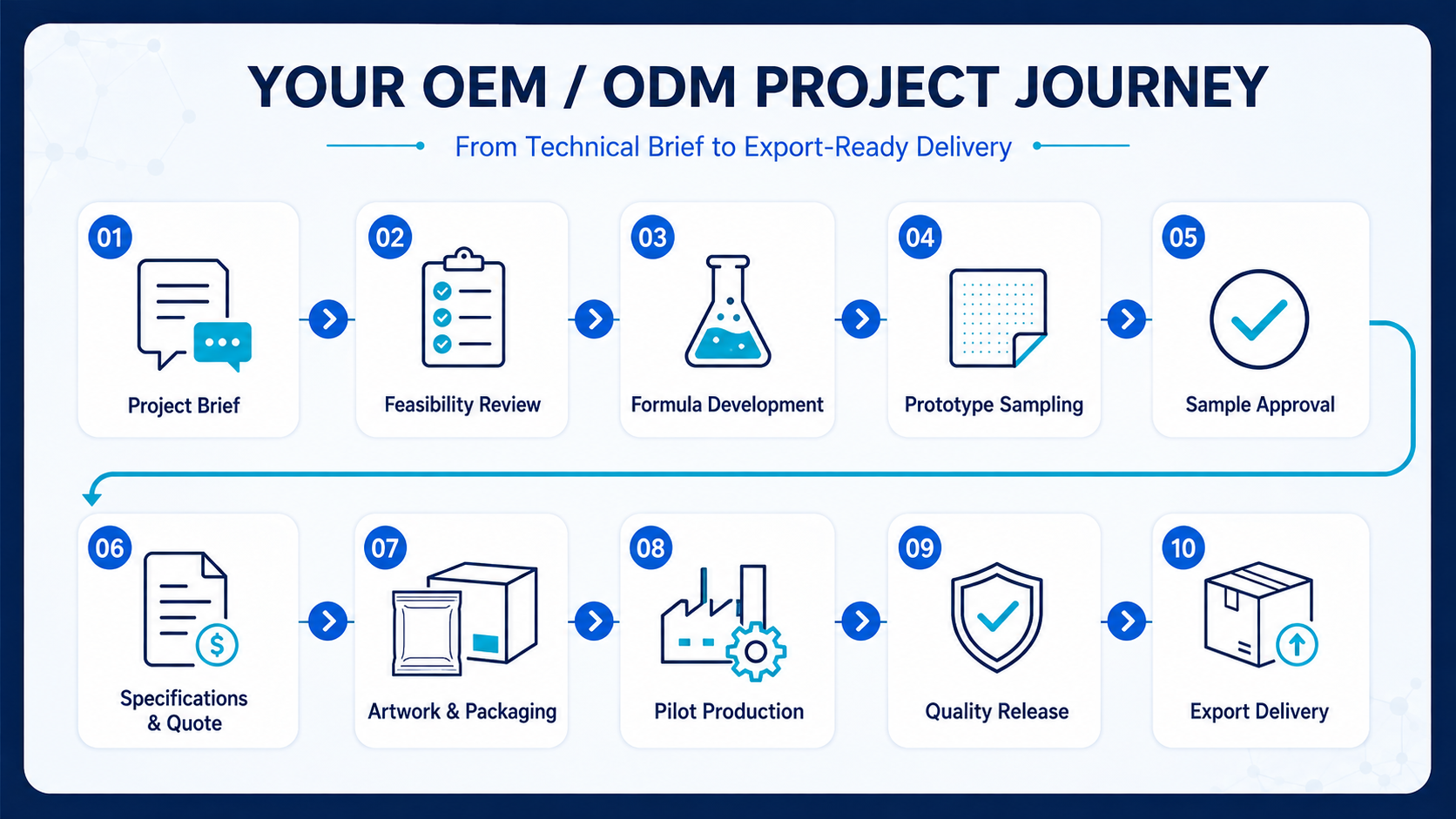
Use a source concept code to define ingredients, then confirm the target market, film dimensions, count, primary sachet and outer-carton style. Specifications, documentation, timelines and commercial terms are confirmed per project.
The brochure describes a nine-step custom oral film service process, starting with requirements discussion and ending with after-sales service. Formula approval and sample approval are separate decisions, followed by order confirmation, agreed payment stages, manufacturing and dispatch. Use this sequence to define responsibilities and acceptance records, not as an automatic production timetable. The brief should identify the intended market, ingredient documents, proposed amount per strip, flavor and packaging configuration. Sample approval should refer to the exact version evaluated and the criteria accepted by the buyer. Manufacturing and release then depend on the written specification, material readiness and agreed documentation. The brochure mentions a standard-order dispatch reference of twenty days, but the applicable start point and schedule must be confirmed in a quotation. Payment terms also require agreement for each order.
The new catalog lists 80 source entries: 20 composite, 20 mint and 40 fruit. Exact-name deduplication yields 76 names across these groups. Similar spellings remain distinct until the sensory brief is confirmed.